Emotional Agility
By Susan David
(you can find it here)
Emotional Agility explores how we relate to our thoughts, emotions, and internal narratives – especially in moments of pressure, uncertainty, or change.
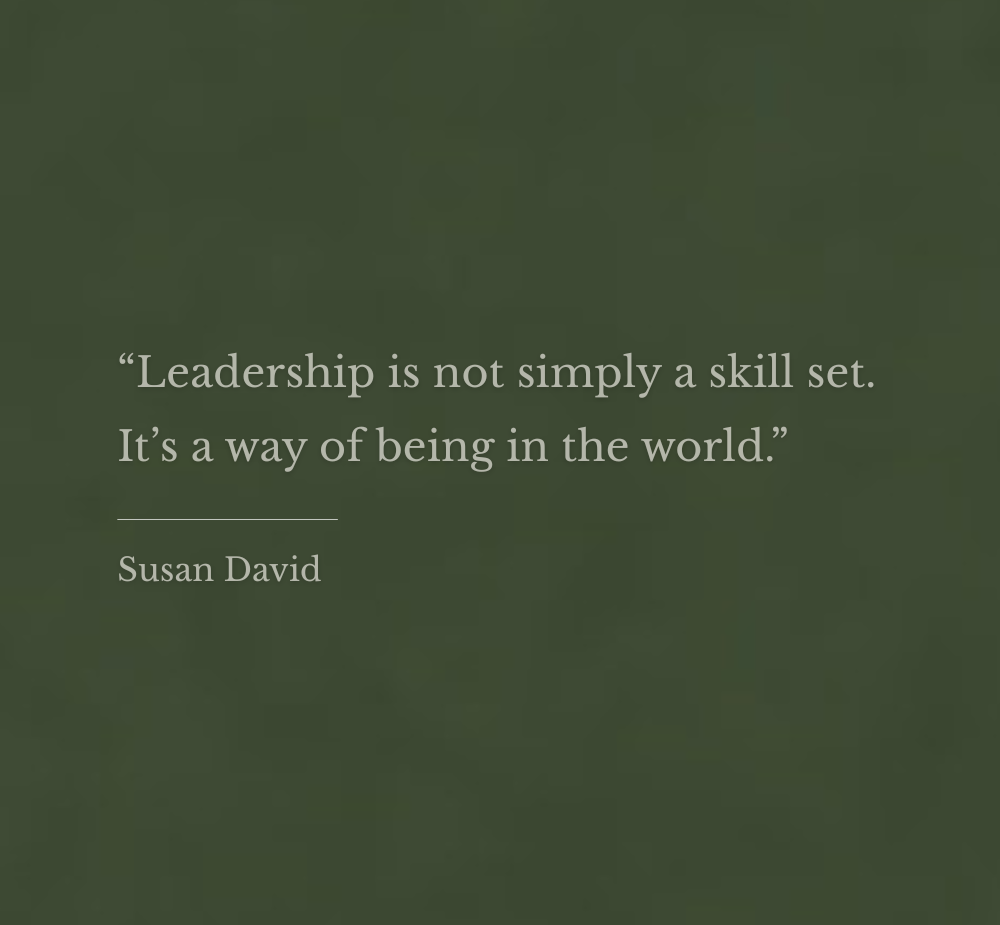
Because leadership isn’t just shaped by what we say or do.
It’s shaped by how we interpret what’s happening around us – and within us.
In the workplace, this shows up in subtle ways:
- how we respond in difficult conversations
- how we navigate tension or ambiguity
- how we manage our reactions under pressure
- how we stay aligned with our values, even when it’s uncomfortable
Before leadership becomes visible, it’s internal.
Reflection for Leadership
Use these prompts to guide your thinking – on your own, or in conversation with others:
- In moments of pressure, how aware are you of what you’re feeling — and how it may be shaping your response as a leader?
- When navigating a difficult conversation, do you tend to react quickly or create space to respond intentionally?
- What patterns show up in how you handle tension, feedback, or uncertainty within your team?
- How comfortable are you sitting with difficult emotions – both your own and others’ – without trying to immediately resolve or avoid them?
- Where might your internal narrative (assumptions, judgments, or self-talk) be influencing how you interpret a situation or a person?
- What would it look like to lead from your values in a moment where your initial reaction pulls you in a different direction?
- How might greater awareness of your internal responses change the way your team experiences your leadership?
In Practice
This isn’t about controlling your thoughts or eliminating difficult emotions.
It’s about noticing them – and choosing how you respond.
Because the way you lead yourself, quietly and consistently, shapes how you lead others.
Closing
This is the first selection in The Leadership Read – a more thoughtful approach to leadership development through reading, reflection, and application.
Rather than moving quickly, this book should be explored over time – creating space to revisit ideas, reflect, and apply them in practice.
Some links are affiliate links. Thank you for supporting this work.